
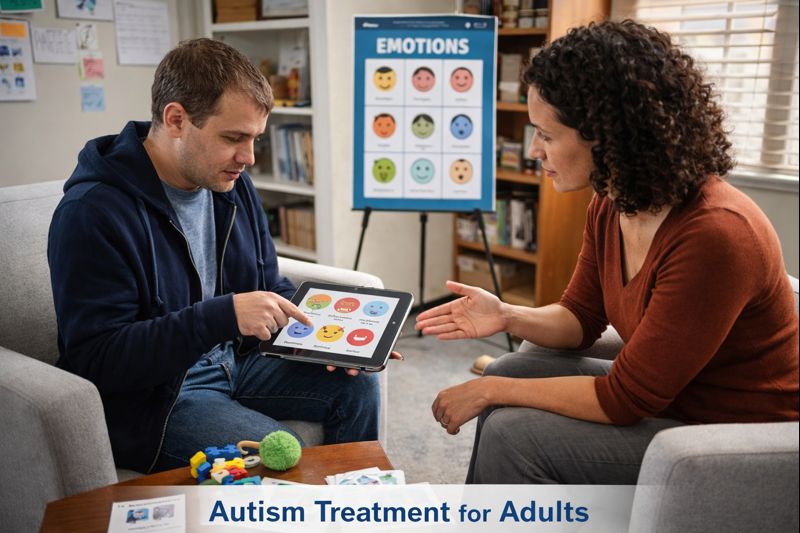
You can find meaningful ways to manage autism as an adult through Autism Treatment Adults programs that focus on therapies, practical skills training, and supports matched to your priorities and daily needs. Effective approaches like cognitive-behavioral techniques for anxiety, skills-based coaching for daily living and social interaction, and tailored supports that address sensory or behavioral challenges help you gain greater independence and reduce obstacles to work, relationships, and wellbeing.
This article shows which evidence-based options tend to work for adults, how to adapt them to your situation, and where to look for professional help and community resources so you can build a plan that fits your goals.
Effective Autism Treatment Options for Adults
You can use behavioral interventions, medication when appropriate, and targeted social-skills programs to reduce distressing behaviors, manage co-occurring conditions, and improve everyday functioning. Each approach targets specific needs—skill acquisition, symptom control, or social competence—so you can combine them based on your goals.
Behavioral Therapies for Autistic Adults
Behavioral therapies focus on teaching practical skills and reducing behaviors that interfere with daily life. Applied Behavior Analysis (ABA) and functional behavioral assessment help you identify triggers, set measurable goals, and use positive reinforcement to increase useful routines like independent self-care or workplace tasks.
Cognitive Behavioral Therapy (CBT) adapts well for adults who have sufficient verbal ability and insight. You can use CBT to reduce anxiety and ruminative thinking by learning concrete strategies: thought records, graded exposure, and problem-solving steps tailored to sensory or social triggers.
Occupational therapy (OT) often uses behaviorally informed techniques to build daily-living skills and sensory regulation. OT can create stepwise plans for meal prep, sleep routines, or transit navigation, with repeated practice, environmental adjustments, and assistive tools when needed.
Medication Management
Medication does not treat autism itself but can manage co-occurring conditions that impair functioning. You and your prescriber should target specific symptoms—anxiety, depression, insomnia, ADHD, or severe irritability—rather than using drugs as a broad fix.
Common classes include SSRIs for anxiety or depression, stimulants or atomoxetine for ADHD symptoms, antipsychotics (e.g., risperidone) for severe aggression or self-injury, and melatonin for sleep onset problems. Start low, go slow: titrate doses, monitor side effects, and evaluate benefit using symptom scales and daily-function measures.
Coordinate care with psychiatrists, primary care providers, and therapists. Keep a medication log, note interactions with alcohol or OTC drugs, and schedule regular follow-ups to reassess goals and discontinue ineffective medications safely.
Social Skills Training
Social skills training teaches concrete behaviors you can use in real-world interactions. Programs break social tasks into components—greeting, topic management, turn-taking, and nonverbal cues—and practice them through role-play, video modeling, and in vivo coaching.
Focus on context-specific skills: workplace etiquette, dating safety, or group conversation strategies. Group-based formats offer peer feedback and real-time practice; individual coaching tailors lessons to your specific strengths and challenges. Ask for measurable objectives, such as initiating conversation twice per day or maintaining eye contact for specified durations.
Use technology to reinforce learning. Video review, social stories, and smartphone reminders help generalize skills across settings. Track your progress with brief self-ratings and third-party reports to ensure skills translate into better relationships and opportunities.
Personalized Approaches and Support Strategies
You will benefit most from interventions tailored to your daily routines, sensory profile, and specific goals. Practical skill-building and reliable community supports form the core of effective adult autism care.
Occupational Therapy Interventions
Occupational therapists focus on improving your ability to perform daily tasks that matter to you, such as cooking, personal care, or commuting. They assess your sensory sensitivities, motor skills, and executive function to build a customized plan.
Typical OT goals include:
- Sensory modulation: strategies like scheduled sensory breaks, weighted lap pads, or noise-reduction headphones to reduce overload.
- Task breakdown: step-by-step routines, visual schedules, and checklists that make complex tasks manageable.
- Adaptive equipment: recommending utensils, shoe fasteners, or phone accessibility settings that increase independence.
Therapists use activity-based practice and real-world coaching. They often deliver in-home, workplace, or clinic sessions and measure progress with functional goals you set, such as “prepare a three-step meal independently” or “use public transit for work twice weekly.”
Support Networks and Community Resources
Identify and connect with supports that match your needs: peer groups, supported employment, vocational rehabilitation, and adult autism clinics. Choose resources that offer clear roles, measurable outcomes, and flexible access.
Actionable options to consider:
- Local ASD support groups or moderated online forums for peer problem-solving and shared strategies.
- Supported employment services that provide job coaching, workplace accommodations, and employer liaison.
- Community mental health providers experienced with autism for CBT or anxiety management.
- Social skills groups with role-play and real-world practice, plus drop-in community centers for sustained social exposure.
Verify eligibility, session frequency, and outcome tracking before committing. Ask providers about specialist experience with adult autism, success metrics, and how they coordinate with your OT, therapist, or primary care provider.