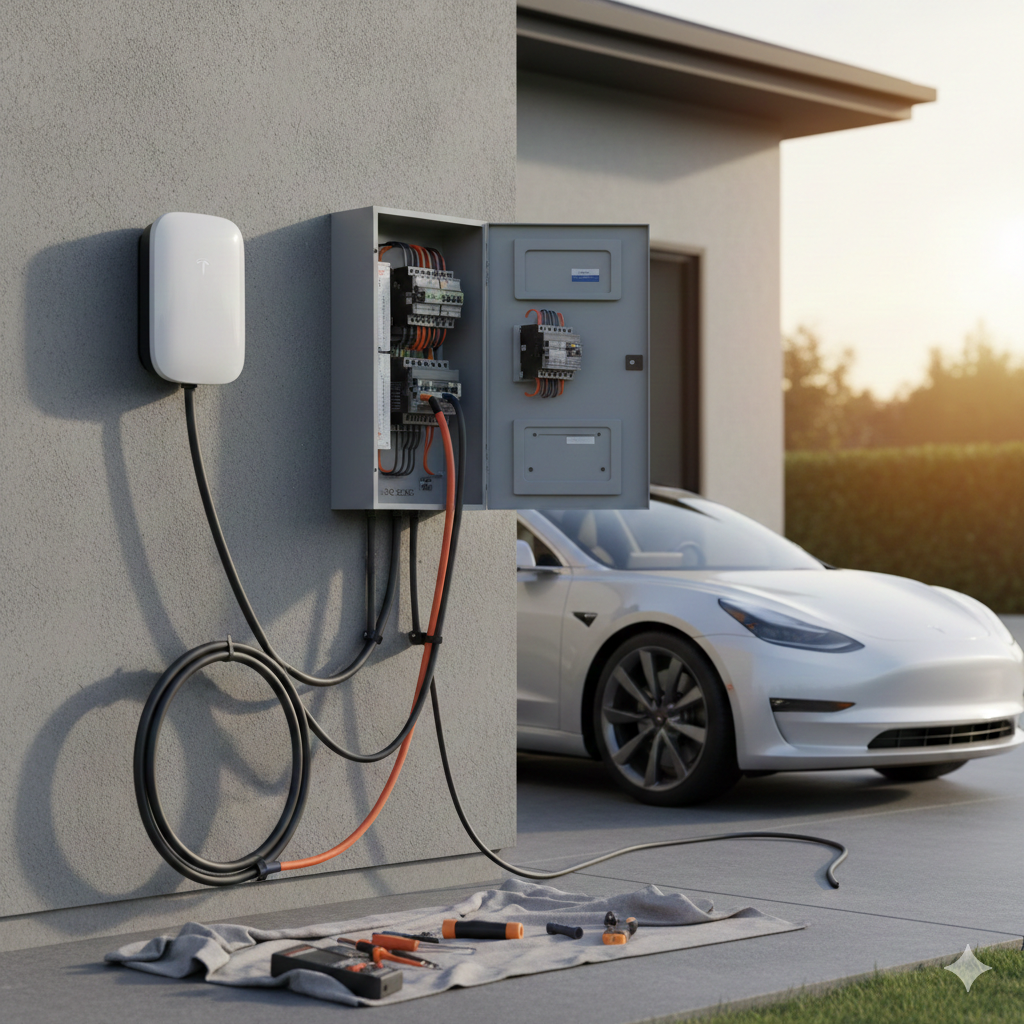
Looking for an “ev charger installer near me” means you want a safe, code-compliant installation that fits your driving habits and budget. Start by prioritizing certified local installers who can assess your electrical panel, recommend the right Level 1, Level 2, or commercial charger, and handle permits and rebates—this saves you time and prevents costly mistakes.
You’ll learn how to find Ev Charger Installer, compare quotes, and prepare your home or business for installation so the process goes smoothly. The following sections show what to ask, what to expect on install day, and how to secure incentives and ongoing support for your charger.
Finding the Right EV Charger Installer Near Me
Look for a local installer who can confirm permit requirements, offer on-site electrical assessments, and provide clear pricing and timelines. Prioritize electricians with EV-specific experience, relevant certifications, and examples of past installations similar to your property.
Local Experience and Certifications
You want installers with field-proven experience in your neighborhood type—single-family home, condo, or workplace—because wiring and access differ widely. Ask for recent references and photos of completed installs that match your setup (garage, driveway, or parking garage).
Verify licensure and insurance: a licensed electrician, business liability insurance, and workers’ comp protect you from damage and liability. Check for EV-specific credentials such as manufacturer-certified installer programs (e.g., ChargePoint, Tesla, Enphase) or industry certifications from recognized bodies.
Confirm the installer pulls permits and handles municipal inspections. Local codes and utility requirements vary; a team familiar with your city will avoid rework and delays. If you’re in a multi-unit building, choose firms experienced with load-sharing, billing software, and common-area electrical upgrades.
Types of EV Chargers Installed
Decide between Level 2 (240V) and DC fast charging based on your daily mileage and parking duration. Most homeowners install Level 2 chargers (208–240V, 16–80A) because they deliver 20–60 miles of range per hour and fit residential electrical panels.
For workplaces or commercial sites, discuss DC fast chargers if you need rapid top-ups, but expect higher installation complexity, three-phase power, and significant site prep. Ask installers which brands and models they routinely install and service.
Request compatibility confirmation with your EV’s plug type and charging standards (e.g., CCS, CHAdeMO, Tesla NACS). Also ask about networked features: authentication, billing, load management, and firmware updates—these affect long-term use and costs.
Understanding Installation Costs
Installation quotes should break down labor, parts, permits, panel upgrades, trenching, conduit, and optional network setup. Typical residential Level 2 installs often range widely depending on distance from the panel, need for a panel upgrade, and trenching; get at least three itemized quotes.
Ask about additional charges: utility service upgrades, demand charges, meter sockets, or HOA approvals for multi-unit sites. Confirm whether the installer handles rebates and incentive paperwork; that can reduce your net cost and speed reimbursement.
Get a written scope of work with timelines, warranty on workmanship, and manufacturer warranty transfer procedures. Pay attention to payment milestones and retain a copy of permits and inspection sign-offs for future resale or warranty claims.
Choosing and Preparing for EV Charger Installation
You’ll review your home’s electrical capacity, confirm permits and code requirements, and set a realistic installation schedule. These steps ensure the charger works safely, meets local regulations, and installs with minimal disruption.
Assessing Home Electrical Requirements
Start by checking your main service size (amps) and available panel capacity. A typical Level 2 charger needs 30–60 amps dedicated circuit; confirm whether your panel can add that without exceeding 80% continuous-load limits.
Have your breaker labels and recent utility bill ready for the electrician. That helps determine whether a simple circuit addition, a panel upgrade, or service upgrade is required.
Ask a licensed electrician to perform a load calculation and inspect wire condition, meter placement, and garage or driveway routing. They’ll identify if you need a subpanel, conduit runs, or trenching for outdoor wiring.
If you live in a multi-unit building, check building electrical infrastructure and any shared metering rules; you may need building-owner approval or a dedicated meter.
Permit and Code Compliance
Contact your local permitting office or check its website for EV charger permit requirements and fees. Many municipalities require an electrical permit and an inspection for any new dedicated circuit or panel work.
Bring equipment specs (charger model, voltage, amps) and the electrician’s license number when applying; this speeds approval.
Confirm compliance with the National Electrical Code (NEC) sections relevant to EV charging, including continuous-load sizing, listed equipment use, and GFCI or AFCI requirements where applicable. Your installer should know provincial or state amendments and arrange the final inspection.
Retain copies of permits and the signed inspection report for warranty and future resale documentation.
Scheduling and Timeline for Installation
Expect a typical residential Level 2 install to take 2–8 hours of on-site work if no panel changes are needed. Schedule extra time if trenching, conduit, or a panel/service upgrade is required—those add 1–3 days depending on contractor availability.
Book the electrician 2–4 weeks in advance in busy markets; request a written estimate with an itemized timeline and start date.
Plan for utility coordination if a service upgrade is necessary; the utility company may need 1–6 weeks to schedule meter or service changes. Confirm who handles permits, inspections, and utility calls—your electrician often manages permits, but you should verify responsibilities in writing.