
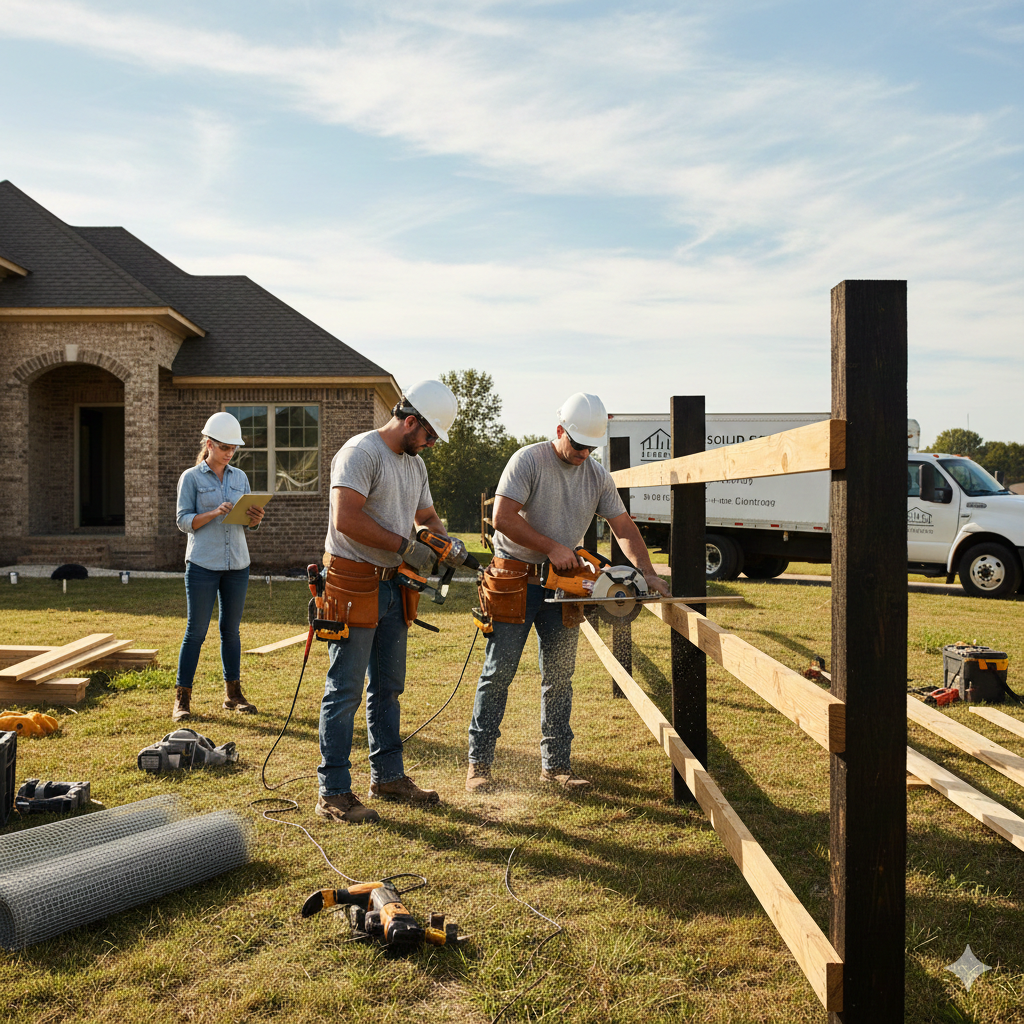
Finding reliable fence contractors near you saves time, protects your property, and keeps your project on budget. You can quickly narrow the field by checking local pro referral services, customer reviews, and whether contractors are licensed and insured — those factors usually point to trustworthy companies that meet your needs.
Start by deciding what you want—privacy, security, low maintenance, or curb appeal—so you can compare estimates on the same scope of work when looking for fence contractors near me. The rest of this article shows how to evaluate contractors, what services to expect, and questions that reveal the best fit for your yard.
How To Choose The Right Fence Contractors Near Me
You should focus on verified local experience, clear pricing, and permit compliance. Prioritize contractors who demonstrate specific material expertise, reliable timelines, and documented warranties.
Factors To Consider When Hiring A Local Fence Contractor
Check local experience first. Look for contractors who have completed projects in your neighborhood or climate, since soil type and weather affect post setting and material choice.
Verify licensing and insurance. Ask for a business license, liability insurance, and worker’s compensation certificates to protect you from liability and property damage.
Review portfolios and references. Inspect recent photos of completed jobs similar to yours and call two or three references to confirm workmanship, punctuality, and cleanup practices.
Compare written estimates. Request itemized bids that list materials, labor hours, permit fees, and cleanup. Avoid vague flat-rate quotes—specific line items let you compare apples to apples.
Confirm warranties and maintenance expectations. Get the length and coverage of any workmanship and material warranties in writing, and ask about routine care needs for wood, vinyl, or metal.
Questions To Ask Potential Fence Installers
Begin with direct, specific questions about your exact project. “Have you installed a 6-foot cedar privacy fence on sloped terrain?” tells you more than a general portfolio review.
Ask about timelines and crew size. Request a start date, expected duration, and whether the crew is in-house or subcontracted. Delays and subcontractor use affect accountability.
Probe warranty and dispute procedures. “What does your warranty cover, and how do you handle claims?” helps you understand remedies if issues arise after installation.
Confirm material sources and brands. Ask which brands and grades of lumber, vinyl, or metal they use, and why those choices suit your property and budget.
Request a site visit and written estimate. A contractor who inspects the site, marks property lines, and provides an itemized estimate demonstrates professionalism and reduces surprises.
Understanding Local Codes And Permits
Determine permit requirements before work begins. Contact your local building department or ask the contractor which permits are required for fence height, location, and proximity to easements.
Clarify boundary and easement rules. Obtain a recent property survey and confirm property lines to prevent neighbor disputes and costly removals later.
Check zoning and HOA restrictions. Zoning ordinances and homeowners’ association rules often specify fence height, materials, and finish—get approvals in writing when required.
Confirm who pulls permits. Establish whether the contractor will secure permits and schedule inspections or if that responsibility falls to you. Written confirmation prevents delays and fines.
Record permit numbers and inspection dates. Keep copies of permits, inspection receipts, and approved plans with your project paperwork for future reference or resale.
Services Offered By Fence Contractors Near Me
You’ll find services that cover new installations, commercial-grade systems, and ongoing repairs. Contractors typically handle site prep, permits, material sourcing, and post-install cleanup.
Residential Fence Installation
You can get full-service installation for common residential materials: wood, vinyl, chain-link, aluminum, and composite. Contractors start with a site visit to measure property lines, check local setback and easement rules, and locate underground utilities before quoting labor and materials.
Expect options for privacy panels, picket-style fronts, and decorative metalwork. They’ll recommend post spacing, concrete footing depth for your soil type, and fence height to meet local codes and your privacy needs. Many teams offer staining or painting, gate installation with latches or locks, and short-term warranty on workmanship.
If you want a custom layout, contractors can draw a simple plan and provide a written estimate with line‑item costs for posts, rails, fasteners, and labor. Ask about lead time, excavation requirements, and trash removal so you know the full scope.
Commercial Fence Solutions
You’ll receive high‑security and code‑compliant options for offices, warehouses, and retail properties. Typical offerings include chain-link with barbed wire, welded steel palisade, aluminum perimeter fencing, and access-control gates with keypads or card readers.
Contractors assess security needs, traffic flow, and fire egress requirements during the site survey. They coordinate with building managers on mounting hardware, bollards, and integration with CCTV or perimeter alarms. Contractors often handle required permits and inspections for municipal or HOA rules.
Pricing usually separates material, civil work (concrete footings, curb cuts), and electrical or automation work. Request references for similar commercial projects and written specifications for load ratings and warranty terms.
Fence Repair And Maintenance
You can arrange repairs for loose posts, broken pickets, sagging panels, and gate realignment. Technicians diagnose cause—rot, frost heave, rust, or impact—and recommend repair vs. replacement based on expected service life and cost-effectiveness.
Common services include post resetting with concrete, board replacement, metal panel straightening, hinge and latch replacement, and rust treatment with primer and paint. Many contractors offer seasonal maintenance packages: inspection, tightening fasteners, re-staining wood, and clearing vegetation.
Ask for a written repair estimate that lists parts, labor hours, and any warranty on repairs. For recurring problems, request an explanation of underlying issues and the remediation plan so you avoid repeated service calls.