
You can get reliable year-round Heat Pumps Ottawa Ontario without skyrocketing energy bills. A cold-climate heat pump sized and installed for your home delivers efficient winter heat and summer cooling while often qualifying you for local rebates.
This article shows which heat pump options suit Ottawa’s variable climate, how professional installation protects performance, and what maintenance keeps your system efficient. Expect practical guidance so you can choose, install, and maintain a system that fits your home and budget.
Heat Pump Solutions in Ottawa Ontario
You can install systems that heat and cool year-round, cut energy use, and qualify for provincial rebates. Choose between air-source, ground-source, and ductless models based on space, budget, and efficiency needs.
Types of Heat Pumps Available
Air-source heat pumps (including cold-climate models) are the most common choice in Ottawa. They mount outside and connect to your existing ductwork or indoor air handler. You get affordable installation and strong cooling performance in summer, with modern cold-climate units rated to provide efficient heat well below freezing.
Ductless (mini-split) systems suit homes without ducts or for room-by-room control. They limit disruption during installation and let you heat or cool specific zones to reduce wasted energy. Ground-source (geothermal) heat pumps offer the highest steady efficiency but require significant yard space and higher upfront cost for loop installation.
Benefits for Ottawa Residents
You’ll see year-round comfort from one system that both heats and cools your home. Expect lower fuel bills compared with electric baseboard or older furnace systems when the heat pump matches your home’s size and insulation level. Many homeowners in Ottawa also qualify for provincial rebates that can reduce upfront costs by several thousand dollars.
Noise and maintenance are typically lower than older HVAC systems. Modern units deliver consistent indoor temperatures and dehumidification in summer, improving comfort. If you plan home renovations or duct upgrades, a heat pump can pair with smart thermostats for tighter control and further savings.
Energy Efficiency Considerations
Look at Seasonal Coefficient of Performance (SCOP) and HSPF ratings for heating efficiency; higher numbers mean better performance in Ottawa’s cold months. For cooling, check SEER ratings. Choose inverter-driven compressors for variable-speed operation; they adjust output to match demand and reduce cycling losses.
Proper sizing and professional commissioning matter more than picking the highest-rated model. Oversized units short-cycle and waste energy; undersized units strain in extreme cold. Also evaluate your home’s insulation, window performance, and air sealing—improvements there amplify the heat pump’s efficiency and lower long-term operating costs.
Climate Suitability in Ottawa
Ottawa’s cold winters require cold-climate heat pumps or hybrid systems paired with backup heat for extreme low temperatures. Many modern air-source models maintain good efficiency down to -25°C; below that, you may need a supplemental electric or gas backup depending on your system choice.
For older or poorly insulated homes, plan for potential backup heat and tighter building envelope upgrades. Ground-source systems remain a strong option if you want stable output regardless of air temperature and you have the land and budget for the ground loop installation.
Installation and Maintenance Services
You’ll learn how to choose a certified installer, what affects installation cost and available rebates, and the routine maintenance tasks that keep a heat pump reliable through Ottawa’s cold winters.
Selecting a Qualified Installer
Choose an installer with Experience in cold-climate heat pumps and Ontario-specific installations. Look for HVAC contractors who list cold-climate models (e.g., inverter-driven, low ambient performance) and who have at least several years of local installations.
Verify credentials: ask for C-NRCan or equivalent certifications, WSIB clearance, and proof of liability insurance. Request references from recent Ottawa installs and check online reviews for responsiveness to service calls.
Get a written quote that breaks down equipment model, SEER/HSPF or HSPF2 ratings, labour, ductwork or electrical upgrades, and warranty terms. Confirm the installer will register equipment for manufacturer warranty and help with rebate paperwork. Insist on a site visit and load calculation (Manual J or equivalent) before signing; simple square-footage estimates risk undersized systems and poor winter performance.
Cost Factors and Rebates
Several variables determine your final price: unit type (air-source vs. cold-climate), capacity, efficiency rating, existing ductwork condition, and complexity of electrical upgrades. Typical Ottawa installations often include a heat pump (outdoor + indoor unit), line set, electrical circuit, and thermostat; upgrades to ductwork or baseboard conversion add to cost.
Rebates can significantly lower out-of-pocket expense. Provincial and federal programs, plus utility or vendor incentives, may cover thousands—commonly up to several thousand dollars depending on eligibility and equipment efficiency. Keep documentation: installer receipts, serial numbers, and proof of professional installation are usually required. Ask your installer to complete rebate pre-approval steps and submit claims on your behalf when possible.
Regular Maintenance Guidelines
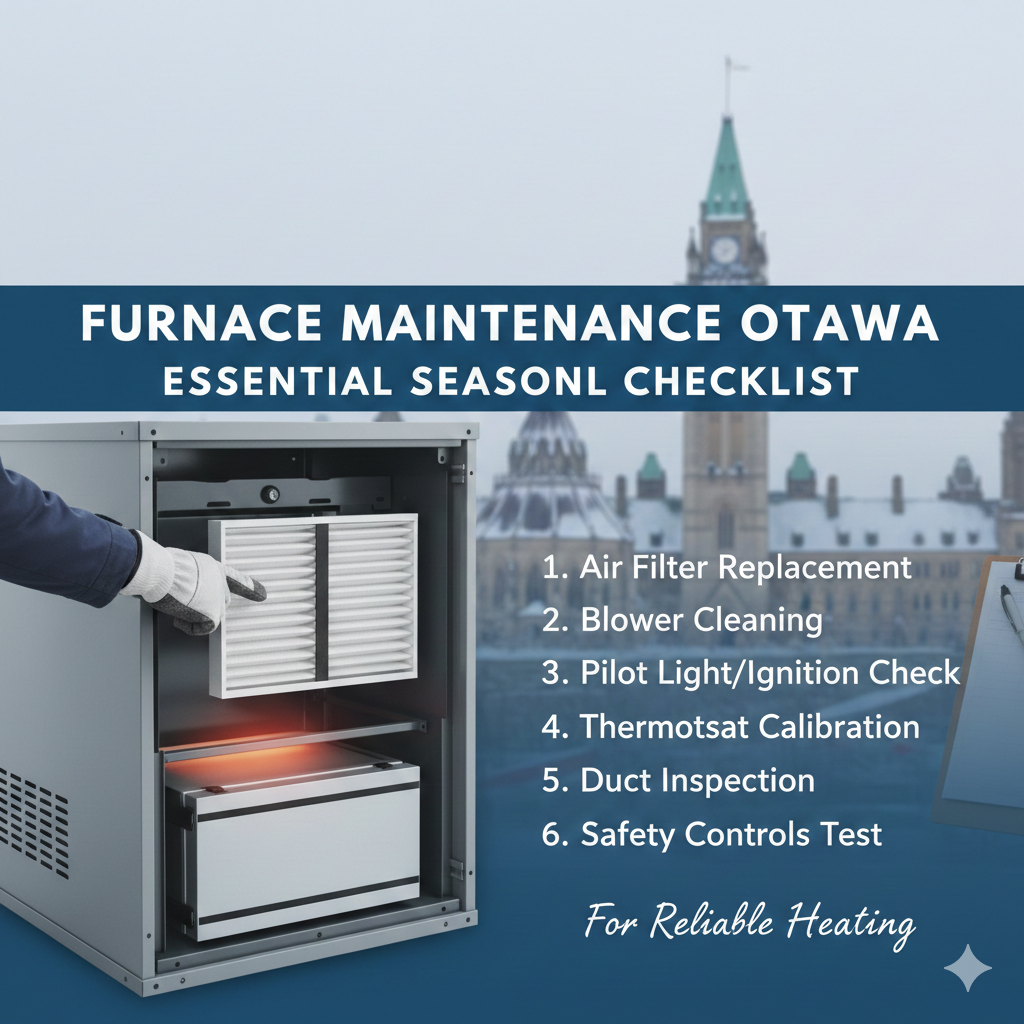
Schedule a professional tune-up at least once per year; for Ottawa’s climate, consider biannual checks (spring and fall) to prepare for heavy cooling and heating seasons. Have the technician inspect refrigerant charge, heat-exchanger condition, defrost cycle operation, reversing valve function, and electrical connections.
You should perform basic monthly tasks: replace or clean filters, clear debris from the outdoor unit, and ensure proper airflow around registers. Watch for warning signs—reduced heating capacity, frequent short-cycling, unusual noises, or rising electric bills—and request service promptly. Keep a maintenance log with dates, performed tasks, and technician notes to maintain warranty coverage and track long-term performance.