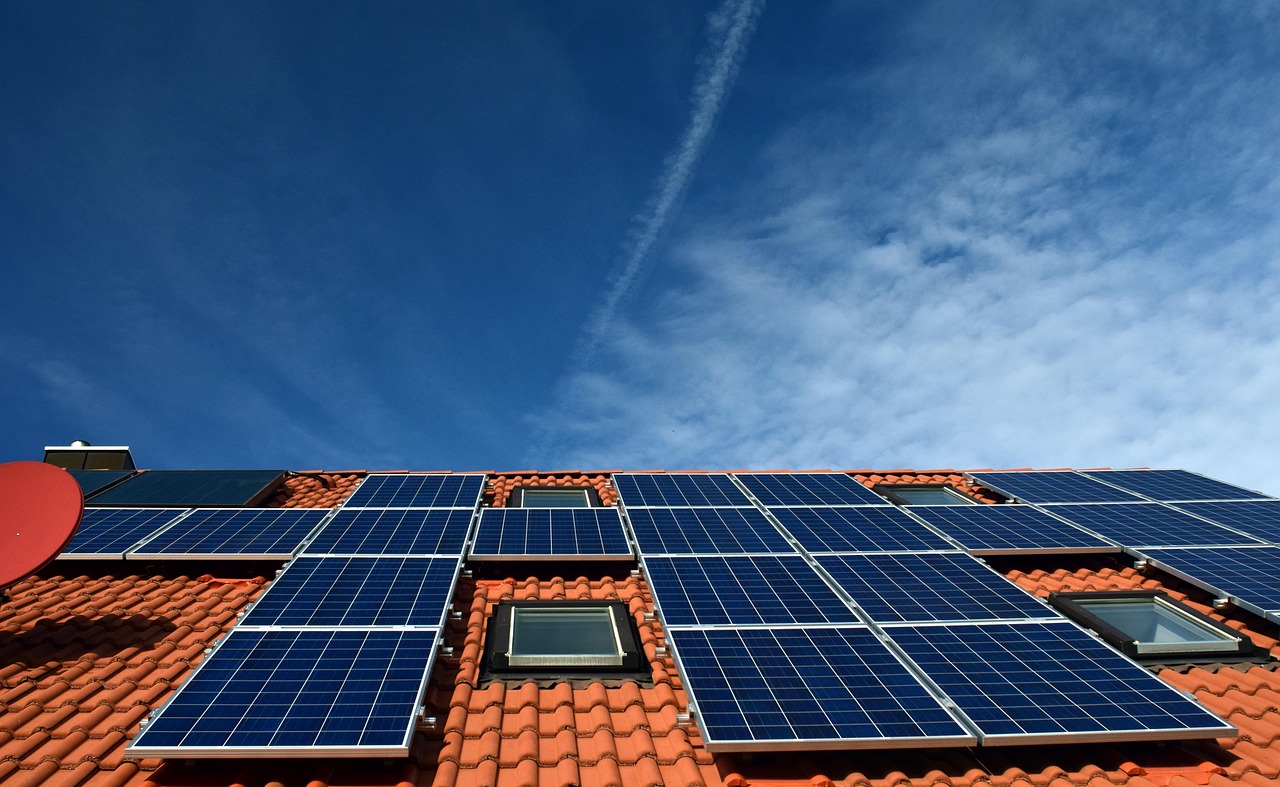
Imagine your building’s windows not just admitting light but quietly producing electricity every day. Solar powered glass integrates thin photovoltaic technology into glazing so your façades, skylights, and balustrades generate clean energy without sacrificing design.
You’ll learn how this glass works, where it makes the most impact, and the practical advantages—like reduced energy bills, added shading, and seamless architectural integration—that make it a realistic option for modern projects. Keep going to see which applications suit your needs and what trade-offs to expect.
Understanding Solar Powered Glass
Solar powered glass converts sunlight into electricity while serving as a functional glazing element. You’ll learn how it generates power, the main technology variants, and the materials that determine efficiency and durability.
How Solar Powered Glass Works
Solar glass captures photons and converts them into electric current through embedded photovoltaic (PV) materials. When sunlight hits the PV layer, it excites electrons in semiconductor cells; those electrons flow through conductive contacts to produce direct current (DC).
An inverter or power electronics convert DC to alternating current (AC) if you need grid or building-ready power. You can also route DC to batteries or low-voltage systems for storage and off-grid loads.
Transparent or semi-transparent designs balance light transmission against power output. Placement, tilt, and shading directly affect generation; north- vs. south-facing façades and local climate matter for expected yield. Integration with building wiring, mounting, and sealing influences long-term performance.
Types of Solar Glass Technology
Crystalline silicon PV glass uses small silicon cells laminated between glass layers. It provides higher conversion efficiency but looks more opaque; you’ll see it in solar roof tiles and some façade modules.
Thin-film technologies (amorphous silicon, CIGS, CdTe) offer flexible, lower-cost options with better translucency and color uniformity. They work well where aesthetics and partial transparency matter more than peak efficiency.
Perovskite and organic PV are emerging for lightweight, tunable-color glazing. They promise higher transparency and lower production cost but still face stability and lifespan challenges. Building-integrated photovoltaics (BIPV) refers to any of these types when designed as windows, curtain walls, or canopy elements rather than standalone panels.
Key Materials and Components
Glass layers: Tempered or laminated safety glass provides mechanical protection and weather sealing. You’ll find low-iron glass in high-clarity applications to maximize visible light transmission.
Photovoltaic layer: Crystalline silicon cells, thin-film coatings, perovskite films, or organic PV layers form the active energy-conversion element. Their bandgap and thickness determine efficiency and transparency.
Encapsulation and interlayers: Ethylene-vinyl acetate (EVA) or ionomer films protect PV materials from moisture and mechanical stress. Edge seals (silicone or polysulfide) prevent ingress and extend life.
Conductive elements: Transparent conductive oxides (TCOs) like ITO or doped zinc oxide, plus fine metal busbars or conductive meshes, collect and route current.
Balance-of-system: Junction boxes, bypass diodes, inverters, mounting frames, and wiring complete the system and affect safety, performance, and maintainability.
Applications and Advantages
Solar powered glass turns glazed surfaces into active energy generators while preserving light transmission and design. You can expect this material to replace or augment traditional building elements, power vehicle auxiliary systems, and reduce heating and cooling loads through smart daylighting.
Building Integrated Photovoltaics
You can install solar glass as façades, curtain walls, skylights, atriums, or balustrades to generate on-site electricity without adding bulky panels. Embedded photovoltaic cells—transparent or semi-opaque—fit within insulated glass units, so your building envelope delivers both weather protection and power generation.
Integrating solar glass often reduces load on rooftop arrays and lowers peak demand charges by producing distributed energy where people work and live. You maintain natural daylighting and sightlines while converting portions of the façade into kilowatt-hours; this preserves design intent and increases usable façade area for energy production.
Consider practical factors: orientation, visible light transmittance (VLT), and cell efficiency determine output. You should balance aesthetic goals with expected annual yield—south- or west-facing glazed surfaces typically produce the most energy in temperate climates.
Automotive Uses of Solar Glass
You can fit solar glass into sunroofs, rear windows, and panoramic roofs to supply auxiliary power and extend electric vehicle (EV) range indirectly. Onboard solar modules commonly power HVAC blowers, infotainment, telematics, and battery thermal management systems, reducing draw on the traction battery.
In hybrid or BEV applications, small daily gains—often 0.5–2 kWh/day depending on surface area and insolation—translate to measurable reductions in fuel use or range anxiety. Solar glass also supports off-grid or accessory functions in RVs, boats, and commercial fleet vehicles where roof area is limited.
Durability, low weight, and integration with vehicle glazing standards matter. You should expect trade-offs between transparency and peak power; designers tune cell coverage and VLT to meet both user comfort and energy goals.
Benefits for Energy Efficiency
Solar glass reduces net building energy use by generating electricity at the point of consumption and by modulating solar heat gain. High-performance coated glass can lower cooling loads while producing power, so you get simultaneous passive and active energy benefits.
You gain peak-shaving potential because generation often coincides with daytime cooling demand. That alignment reduces reliance on grid-supplied peak power and can lower demand charges for commercial buildings. Additionally, you may qualify for incentives or improved green building ratings when solar generation contributes to onsite renewable targets.
Operationally, integrated solar glass minimizes transmission losses compared with remote arrays and can extend equipment life by offsetting HVAC cycling. When selecting products, review lifecycle durability, maintenance access, and modeled annual kWh/m² to estimate real-world efficiency gains.